Housing. Activation. Land. Opportunity.
The current system only works while you recognise it. Build something better and it becomes obsolete -- without fighting it.
We build communities that give back more than they take.
The Context
people experiencing homelessness on any given night
average time to save a home deposit in Australia
average monthly rent in regional Australia
While land sits underused across the country, communities are locked out of housing. Traditional pathways are broken. HALO is a different approach.
Our Purpose
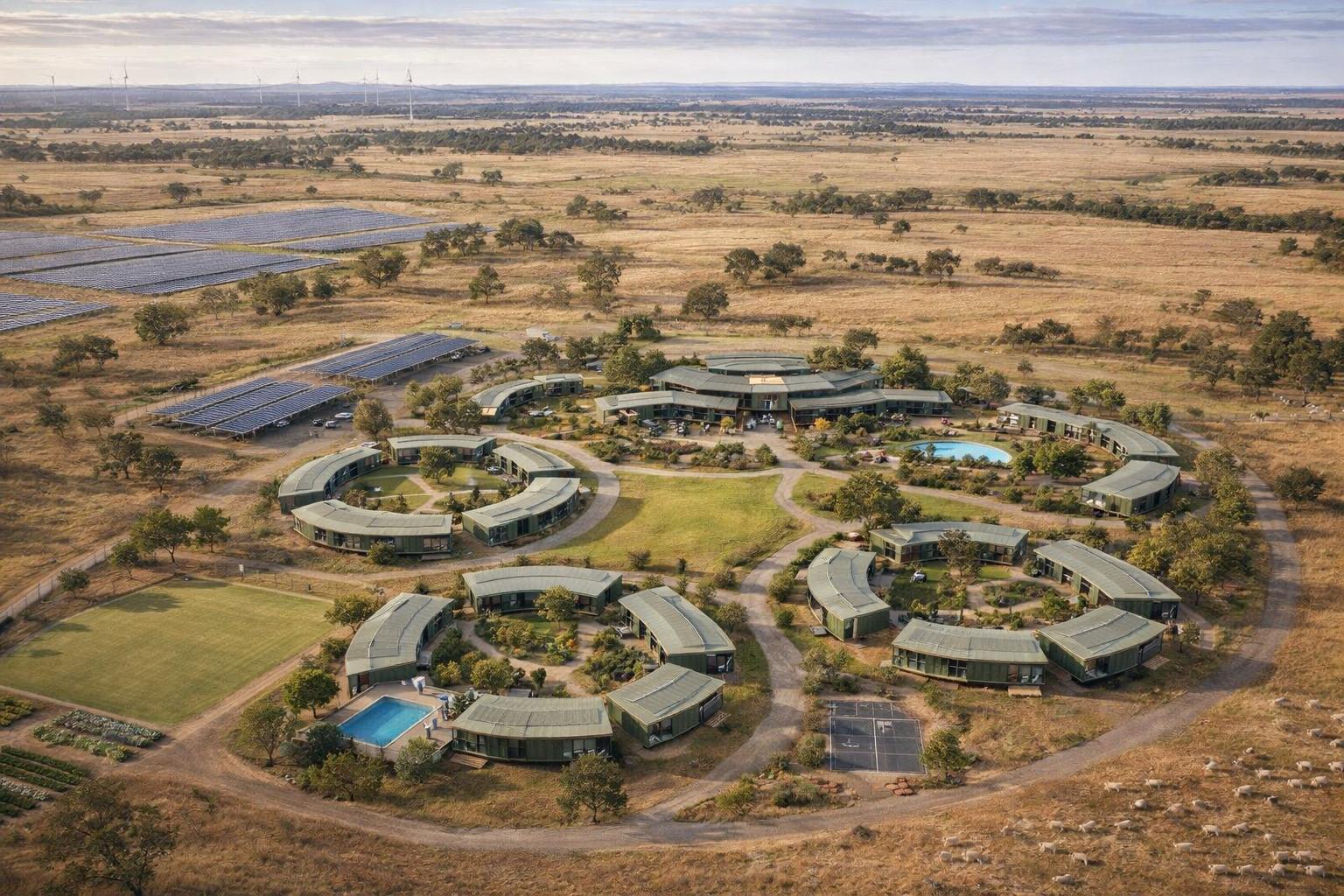
HALO provides a single, compliant, low-impact model that activates underused landholdings -- post-mining, government, idle rural -- to create local jobs, affordable housing, and long-term community value.
Landholders retain control. Cultural integrity is centred from day one. No subdivision, no permanent alteration. The land comes first -- and the community grows with it.
Replicable across every region in Australia
Framework
Four principles that make housing work differently
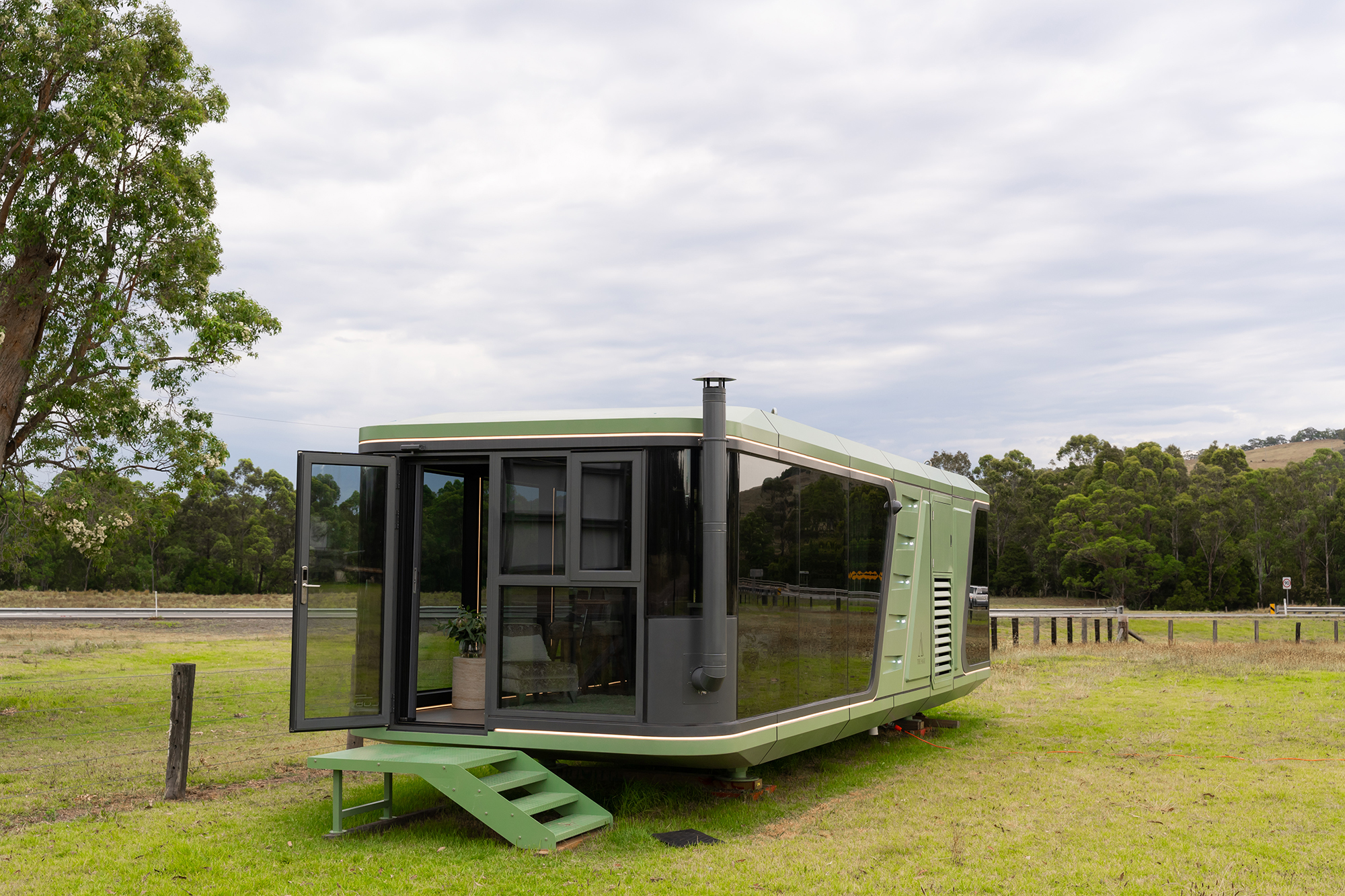
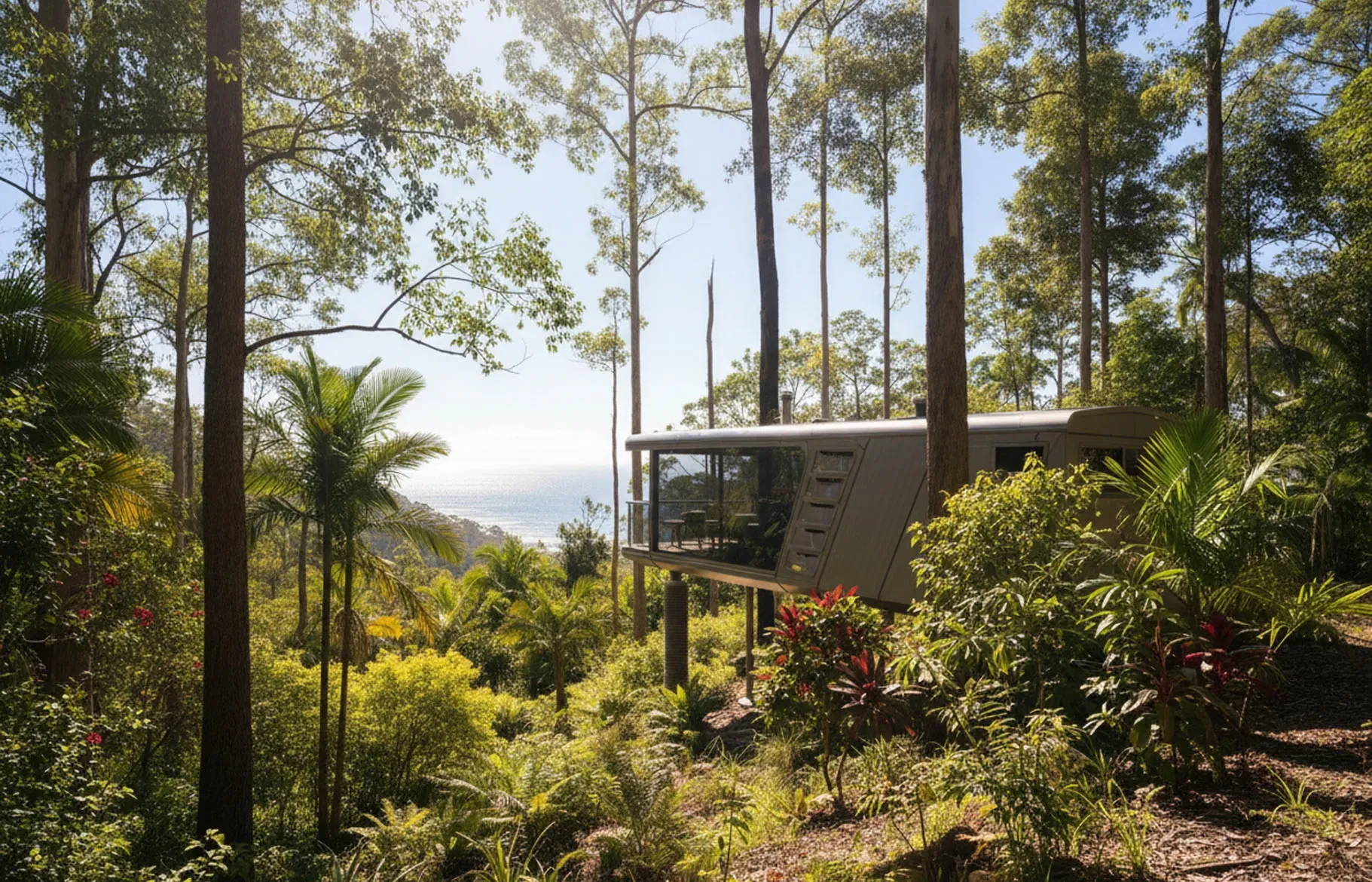
Cabins sit on piers or screw-piles -- no concrete slabs, minimal earthworks. Existing land tenure remains intact. The land comes first, always.
This approach works within existing planning frameworks, using movable dwelling and temporary accommodation pathways to reduce approval timelines.
Infrastructure
Low-impact. Upgradeable. Climate-ready.
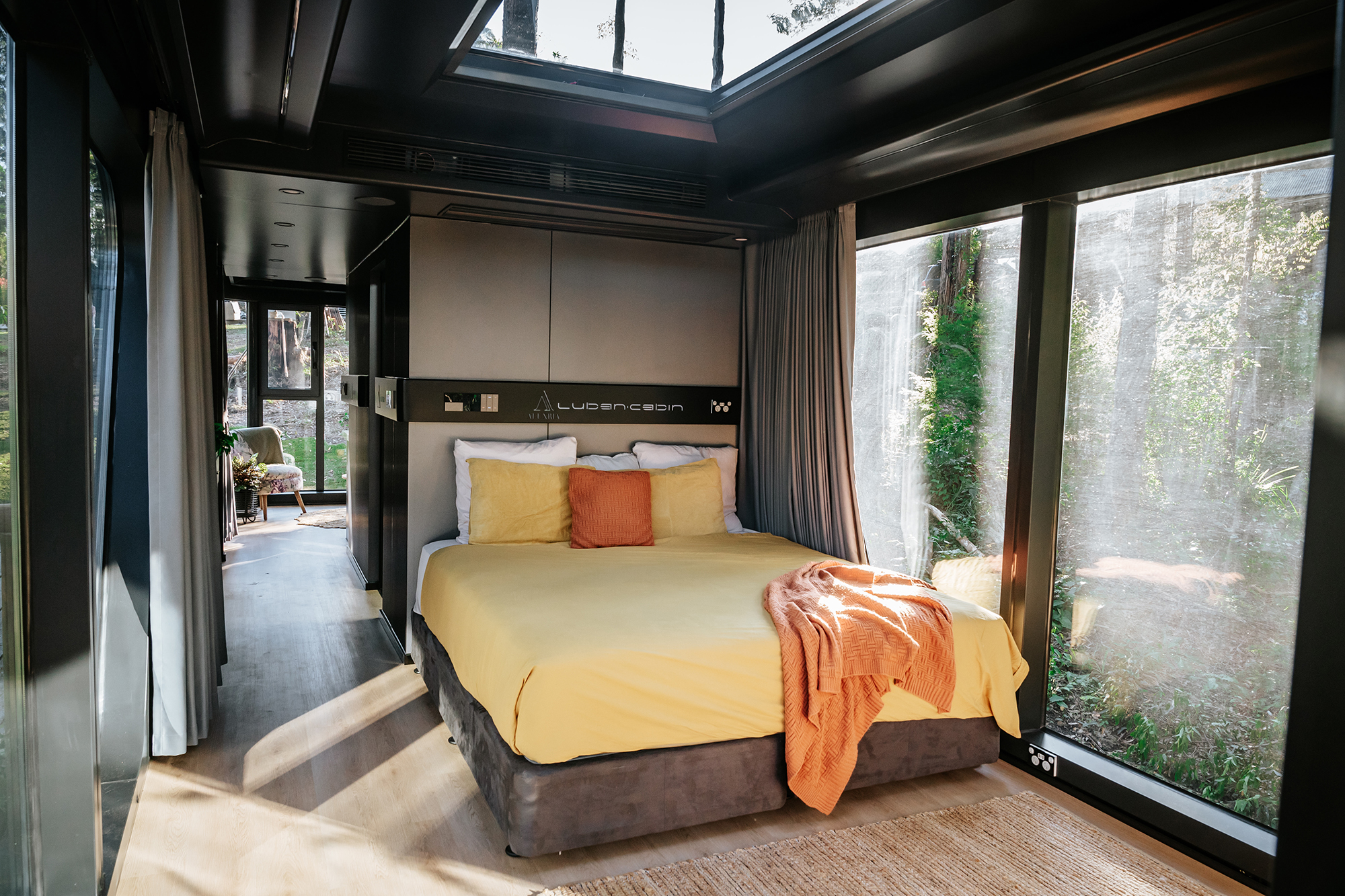
1-2 bedroom, accessible options. Aluxria cabins manufactured by Luban. Installed on piers or screw-piles. Fully relocatable, NCC compliant.
Community kitchen and laundry, maker workshop, training rooms, multi-use hall, tool library. Infrastructure that builds connection.
Solar and battery microgrids, rainwater capture, greywater reed-beds, compost systems. Net-zero infrastructure from day one.
Market gardens with tech-augmented yield -- vertical farming, hydroponics, biochar. Furniture making from timber. Innovation hubs. Self-sustaining enterprises that create funding levers and make the village economically independent.
Across Australia, essential workers on renewable energy projects, agricultural operations, and remote infrastructure builds are housed in dongas -- temporary boxes that ignore mental health, community, and human connection. Workers endure work-sleep-fly home cycles with no sense of place.
HALO changes this. Proper housing. Community spaces. Connection to country. Not just a bed near a worksite, but a village that supports wellbeing, builds skills, and creates lasting value for the region long after the project ends.
With 15-20 year renewable energy projects rolling out across the country, the essential worker accommodation market is enormous -- and ready for a model that treats workers like people, not logistics.
Flagship
A 50-100 home regenerative micro-town on Glencore's former mine lands in the Hunter Valley, NSW
Post-mining land with existing access roads, hardstands and services -- reducing cost and planning risk
Acute local housing need in the Hunter Valley region
Skilled local workforce ready for new opportunities
A flagship regenerative micro-town model that councils across Australia can replicate
NCC-compliant primary dwellings, fully relocatable
Skills and careers pipeline with TAFE and RTO partners
Traditional Owner governance from co-design through operation
Auditable governance that reassures lenders and councils
A shovel-ready, low-risk pathway to unlock housing supply, jobs and land repair on an already-disturbed site.
Workforce
Empowering individuals through hands-on learning. With TAFE/RTOs and OEM partners.
Solar, battery and energy management systems operation and maintenance
Rainwater harvesting, greywater treatment, composting and reed-bed systems
Screw-pile installation, site preparation, pathways and drainage without permanent earthworks
Cabin assembly, finishing, connection and commissioning on-site
Revegetation, habitat corridors, soil remediation and ecological monitoring
Estate stewardship, community coordination, NDIS support and resident services
These aren't new skills -- they're transferred skills.
People from trades, industry, and hands-on backgrounds already think in systems, safety, and precision. Their practical experience transfers directly into modular construction, utilities management, and land repair. HALO leverages that expertise through Recognition of Prior Learning (RPL) pathways -- giving opportunities to people who don't normally have them.
First Nations
With Traditional Owners, not for them
Paid governance role for Traditional Owners. Real authority over land use, cultural protocols, and estate identity -- not advisory in name only.
Seasonal calendars, cultural burning, habitat corridors, water and soil care. A living document that guides land stewardship across every stage.
Rangers, bush-foods nursery, monitoring and reporting, place identity. Real employment and enterprise, not tokenistic inclusion.
HALO is led by Steven Phillips, a proud Gomeroi man and member of the Lands Council in Coonabarabran. Halo holds MOUs with traditional owners and land councils around Australia.
Values
The human layer embedded in every agreement and circle
These values sustain culture, safety, and pride across every HALO community. They are embedded in every governance agreement, resident covenant, and training program -- the circle of participation, giving to something that gives back.
Governance
Co-op/Trust model with estate covenants. Transparent, auditable governance that reduces council risk, reassures lenders, and builds resident finance histories.
Site Integrity & Improvement Fund
A dedicated lifecycle fund for maintenance and upgrades providing bank-grade stewardship and protecting council reputation.
Resident Contributions
Regular payments into the fund
Operating Surplus
Revenue from estate operations
Grants & Credits
Government and carbon credit funding
Enterprise Revenue
Income from estate enterprises
SINC Fund
Maintenance, improvements, land repair, water management, community programs
HALO's strategy is deliberate: use regenerative essential worker villages under a consortium model to prove the system works. Build with strong governance, transparent financials, and measurable outcomes. Once proven, the model speaks for itself -- and it can't be denied.
Halo does not depend on winning an ideological battle before it begins. It is intentionally designed to work within existing pathways wherever possible -- lease-based structures, low-impact modular deployment, reversible site strategies, community covenants and governance templates that reduce approval friction and bankability risks. If entrenched interests attempt to block activation without basis, Halo is positioned to test those assumptions -- especially where underused land, regenerative use, community benefit, and First Nations-led stewardship intersect. The model is not reckless. It is disciplined, documented, and increasingly defensible.
Prove it. Protect it. Scale it.
The pathway is simple, even if the work is not. Prove it through pilots that are measurable, compliant, and socially undeniable. Protect it through governance, documentation, legal defensibility, and cultural legitimacy. Scale it by turning successful pilots into a repeatable national model.
Halo does not need to fight the current system head-on. It needs to build something stronger beside it -- something so practical, transparent, and regenerative that resistance starts to look irrational.
Timeline
Four stages over 30 months to a fully operational regenerative micro-town
MOUs, protocols and due diligence. Country Plan co-design with Traditional Owners. Master-planning, site assessment and regulatory pathway confirmation.
Deploy 20-25 cabins plus core community hub. Launch Community-to-Careers training program. Install first circular utility systems. Begin land repair works.
Scale to 50-75 cabins. Establish repair-reuse lab and social enterprise. Expand food systems. Second cohort of training graduates operating estate systems.
Complete to 100 cabins. Full community self-governance operational. Audited ESG report published. Model documented for replication across other sites. The goal: communities reaching complete self-sufficiency within 5-7 years.
Cabin cost each
A$80k-A$220k
Shared infra/dwelling
A$30k-A$50k
50 homes total
~A$5.5-A$13.5m
100 homes total
~A$11-A$27m
Self-Sufficiency Index
Jobs & Training Placements
Country Health Improvement
Ecosystem
HALO is a collaborative framework. Every partner brings essential capability.
Cultural governance, Country Plans, land stewardship, procurement and employment pathways
Planning endorsement, land access, community engagement, compliance facilitation
Policy alignment, grant funding, housing targets, just transition frameworks
Site access, post-mining land activation, ESG offset outcomes, legacy value
TAFE, RTOs, OEM partners. Curriculum design, RPL pathways, on-site delivery
Bendigo Bank, Indigenous Business Australia, CSCEC. Finance, procurement, supply chain
Sally and Nigel from The King's Foundation share HALO's vision for regenerative community-led housing. Their work on sustainable placemaking, traditional craftsmanship, and community resilience aligns closely with the HALO model -- a powerful signal that this approach has global credibility.
Next Steps
Endorse master-planning. Agree Stage-0 resourcing. Nominate representatives to a joint working group.
Formalise Cultural Advisory Circle and Country Plan co-design. Establish paid governance and procurement pathways.
Align on procurement, training partnerships and compliance dashboards. Finance pathways from rent to ownership.
Brief neighbours, Landcare and unions. Schedule open days. Build local awareness and support for the model.
Finance with Purpose, Policy with Impact
The Product
Precision-manufactured by Luban, NCC compliant, and fully relocatable. Aluxria cabins can qualify as primary dwellings, delivering quality housing that meets the same codes as any site-built home.
Explore AluxriaGet Involved
Whether you represent council, a land council, a training provider, or a lending institution -- we want to hear from you. HALO works because it brings the right people together.
Focus Areas
Regional and Semi-Urban Australia